
How to Choose a Halligan Bar
Choose a bar your crew can carry, control, and pair with the tools already on the rig. Start with the six-point buying checklist, then compare Halligan bars and irons at Shop Darley.
Fit the assignment
Balance length and leverage with the room available to work.
Check the working ends
Compare the fork, adz, pike, and striking surfaces.
Match the irons
Check the fit with your axe, carry strap, and apparatus bracket.
Six things to check before you buy
Use your assignment, local door hardware, and department training to guide the choice. Confirm the specifications for the exact model before ordering.
-
Length and working room
Compare 24-, 30-, and 36-inch options. A shorter bar is easier to carry in confined spaces; a longer bar needs more room to work. A 30-inch bar is a useful starting point for a general-purpose comparison. Measure the rig compartment before choosing.
-
Construction
Check whether the bar is forged in one piece or assembled from separate components. Confirm the intended uses, attachment design, and inspection requirements. Do not assume that every model in a product family has the same construction.
-
Weight and balance
Compare the listed weight for the exact length and configuration. Handle the bar with gloves if possible and check how it feels when carried with the axe. Product names such as lightweight do not replace a specification check.
-
Fork and adz geometry
Look at tine thickness, taper, spacing, striking surfaces, and any factory reference marks. Check the fit with your local hardware and through-the-lock tools. Use manufacturer-approved configurations rather than modifying a new tool to make it fit.
-
Material and finish
Compare the steel, working-end treatment, and corrosion protection. For example, Council Tool describes its TD30 as one-piece forged 4140 alloy steel. Confirm the care instructions for the tool you select; do not treat a grip coating as approval for electrical work.
-
Grip, visibility, and carry
Check how the shaft feels in wet gloves, how the tool is identified, and how it is secured on the rig. Make sure a sling or marrying strap fits the complete tool combination and does not obstruct the working ends.
Council Tool product brochure | Paratech forcible-entry tools
Know the working ends
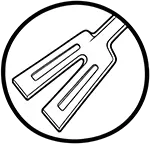
Fork (claw)
Compare the taper and spacing of the tines, the shoulders, and any factory gap-and-set marks.
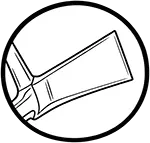
Adz
Compare edge width, curvature, and its relationship to the striking surface.
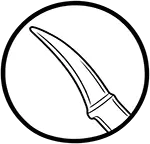
Pike (point)
Check its shape and condition, and confirm the model has the working end your assignment requires.
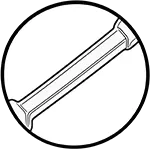
Shaft
Check grip, balance, finish, and the fit with the axe and mounting bracket.
Compare Halligan bars at Shop Darley
Start with the construction and length you need, then compare the working ends and weight. The groups below retain all 12 Halligan and Hooligan bar listings from the original guide. Open a product page for current options and specifications.
Classic bars
On smaller screens, scroll across to compare all six columns.
| Product | Brand | Length | Weight | Build | Best for |
|---|---|---|---|---|---|
| 30" Pro Bar | Fire Hooks Unlimited | 30 in | 8.5 lb | One-piece drop-forged aircraft alloy steel | Crews comparing a traditional 30-inch one-piece bar |
| Council Tool 30" Halligan Style Forcible Entry Tool | Council Tool | 30 in | Not listed | One-piece forged 4140 alloy steel; thinned forks, gap/set marks, clear lacquer | A factory-tuned bar to pair with Council Tool irons |
| Single Piece Forging (SPF) Hooligan, 30" | Paratech | 30 in | 9.7 lb | Single-piece forged steel; electroless nickel plating | Crews prioritizing one-piece construction and a plated finish |
| Pro-Bar 36 | Fire Hooks Unlimited | 36 in | Approx. 8 lb | Drop-forged, heat-treated high-carbon steel; grip | Assignments that call for a longer bar and allow room to use it |
| Leatherhead Halligan Bars | Leatherhead Tools | 24, 30 or 36 in | Not listed | Forged high-carbon steel; reflective elements; made in USA | Comparing several lengths within one product family |
| Paratech Hooligan Entry Tool | Paratech | 30, 36 or 42 in | Not listed | Forged alloy-steel heads and claws; grooved steel bar; standard or metal-cutting claw | Choosing a longer configuration or a metal-cutting claw |
| Forcible Entry Tool | Flamefighter | 24, 30 or 36 in | Not listed | High-strength steel; ergonomic handle; tactical black finish | Comparing a range of lengths in the Flamefighter line |
Specialty and lightweight bars
On smaller screens, scroll across to compare all six columns.
| Product | Brand | Length | Weight | Build | Best for |
|---|---|---|---|---|---|
| MAXXIMUS Forcible Entry Bar | Fire Hooks Unlimited | 30 in | Approx. 8 lb | One-piece drop-forged 4140 chrome vanadium steel; 2¾-inch adz; molded TPR grip | Crews who prefer the wider Maxximus adz |
| Maxximus-Mod Forcible Entry Bar | Fire Hooks Unlimited | 30 in | Approx. 8 lb | One-piece drop-forged 4140 chrome vanadium steel; 2-inch adz; molded TPR grip | Crews who prefer a narrower adz in a 30-inch bar |
| Maxximus-Rex Forcible Entry Halligan Bar | Fire Hooks Unlimited | 30 in | Approx. 8 lb | One-piece drop-forged 4140 chrome vanadium steel; integrated Rex lock-pulling adz | Adding a built-in lock-pulling feature to the bar |
| Mini Maxx-Mod Forcible Entry Halligan Bar | Fire Hooks Unlimited | 24 in | Approx. 6 lb | One-piece drop-forged 4140 chrome vanadium steel; 2-inch adz; molded TPR grip | Crews seeking a shorter Maxximus-format bar |
| Lightweight Hooligan Tool | Paratech | 24 or 30 in | Net weight not listed | Heat-treated alloy-steel working components; nickel plating; molded rubber grip sleeve | Comparing a lighter Hooligan configuration and shorter carry options |
Specifications reflect the linked product listings reviewed November 2, 2026. Approximate weights are labeled; missing net weights are not replaced with shipping weights. Confirm the selected size and configuration before ordering. “Best for” describes selection considerations, not a performance ranking.
Browse the Halligan Bars collection
Complete the irons
Plan the Halligan, striking tool, and carry system as one setup. Check the fork spacing against the axe you use and confirm that the pair can be secured and removed from the rig easily. Compare a complete set with individual components before ordering.
Match the bar to your crew and rig
Share your assignment, preferred length, current axe, and compartment measurements. Darley can help you compare specifications and assemble an equipment quote.
Discuss Your Forcible Entry SetupKeep your Halligan ready for service
Use the tool manufacturer's inspection and maintenance instructions. Build those checks into your department's equipment routine.
- Inspect the fork, adz, pike, and shaft for damage after use. Remove a bent, cracked, or otherwise damaged tool from service for evaluation.
- Clean and dry the bar using the specified method. Check the finish and follow the manufacturer's corrosion-control instructions.
- Check the carry strap, grip material, identification, and apparatus mount. Replace damaged components using approved parts and procedures.
- Ask the manufacturer before dressing edges, altering fork spacing, welding, heating, or applying powered abrasives. Do not improvise a repair.
Training context: leverage and gap, set, force
A Halligan acts as a lever, but its actual mechanical advantage depends on the working end, fulcrum, and placement. Treat fixed leverage ratios as training examples rather than a performance guarantee for every bar and door.
Gap, set, and force describes a conventional entry sequence. Learn placement, striking communication, door control, and tool limits through supervised department training. This buying guide does not replace that instruction.
Fire department conventional-entry drill reference — see the conventional forcible entry drill.
Questions crews ask
What size Halligan bar should I choose?
Compare the bar with the work your crew performs and the space available. Start a general-purpose comparison with a 30-inch model; consider shorter or longer options when the assignment, working room, and storage support them.
How much does a Halligan bar weigh?
Weight varies with model, length, and construction. Check the current product specification for the exact configuration and compare its balance with the striking tool you plan to carry.
What is the difference between one-piece and assembled construction?
A one-piece forged bar is made as a single forging. Assembled designs join separate components. Compare the intended uses, attachment design, and manufacturer instructions rather than assuming all bars are built alike.
What is a Hooligan tool?
Hooligan is the name used by Paratech for its Halligan-style forcible-entry tools. Paratech offers different constructions and configurations, including the single-piece forged SPF model.
What tool goes with a Halligan?
A flathead axe is a common pairing; a department may also specify a suitable striking tool for the assignment. Check tool compatibility, the carry arrangement, and department training before building the set.
Can I change fork spacing or modify the bar?
Ask the manufacturer before modifying the tool. Follow its permitted methods and warranty conditions. If the working ends do not suit your equipment or local hardware, compare another factory configuration.
How do I maintain a Halligan bar?
Follow the manufacturer's cleaning, inspection, corrosion-control, and maintenance instructions. Check the bar and its carry equipment after use, store it securely, and remove damaged tools from service for evaluation.
What should I check before ordering for the whole department?
Confirm the exact model and length, construction, listed weight, axe compatibility, carry equipment, and apparatus bracket or compartment dimensions. Standardize training and inspection procedures alongside the equipment purchase.
Reviewed November 2, 2026. Confirm current product specifications and follow manufacturer instructions and department training.