
Kappler
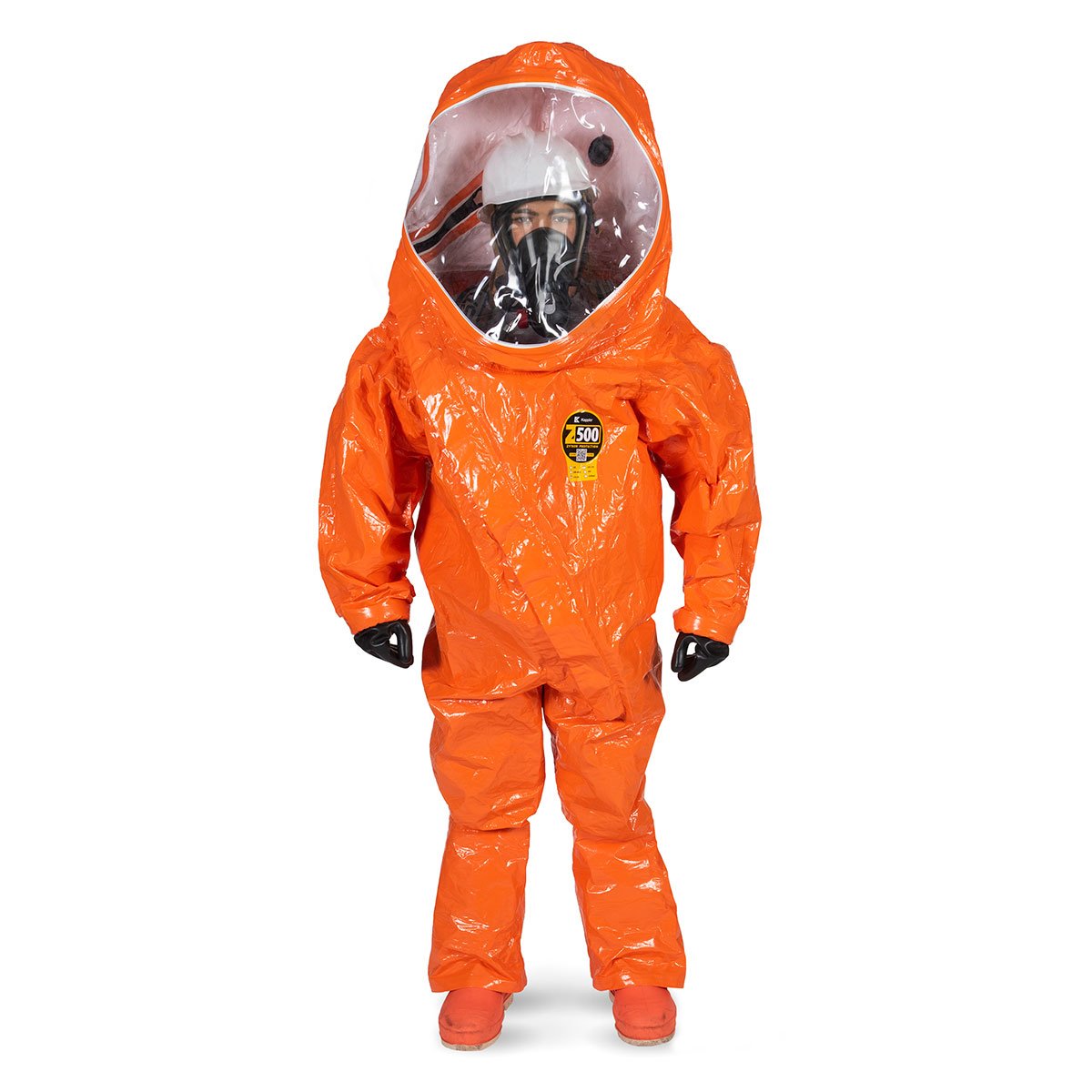
Zytron® 500 Vapor Total Encapsulating Suit Front Entry
Based on patented technology that created the first material to survive eight full hours against the ASTM F1001 Test Battery with no breakthrough. Options: HazMat Model or NFPA 1994 Class 2 - 2012 Edition Orange or Charcoal
Looking for a quote? Simply add your items to the cart and choose Request for Quote during checkout.
Enter a value between 1 and 100000000 in increments of 1.
Earn Darley Dollars with this purchase
The Kappler Zytron 500 Vapor Total Encapsulating Suit is the classic choice for emergency responders seeking top-level protection in hazmat response and other demanding situations. With an extensive list of chemicals tested numbering in the hundreds, it's no wonder that responders around the world trust Z500 garments for ultra-demanding Level A and Level B applications.
Features
- Greater than 8-hour holdout against hundreds of chemicals: Proven holdout against Chemical Warfare Agents (CWA).
- New patent-pending AntiFog Expanded-View Visor System: Ensures clear visibility in challenging conditions.
- Softer, pliable fabric: Enhances comfort for extended wear applications.
- Front Entry AquaSeal® Gas-Tight Zipper: Provides a secure and tight seal.
- Double Storm Flaps with Hook & Loop Closure: Adds extra protection.
- Expanded Back: Allows for greater mobility and comfort.
- Field Replaceable 2N1® Glove System: The Z5H582-94C2RPBC model includes a removable overglove for added flexibility.
- Attached Sock Booties with Splash Guards: Protects feet and lower legs from exposure.
- Knee Reinforcements: Adds durability and protection in high-wear areas.
- 2 Exhaust Valves: Maintains internal pressure and comfort.
- Radio Pocket: Convenient storage for communication devices (Z5H582-94C2RPBC model).
- Berry Compliant: The Z5H582-94C2RPBC model meets Berry Amendment requirements.
Features by Model
Model Z5H582-94C2RPBC
- Front Entry AquaSeal® Gas-Tight Zipper
- Double Storm Flaps with Hook & Loop Closure
- Expanded View AntiFog Visor System
- Expanded Back
- Field Replaceable 2N1® Glove System with Removable Overglove
- Attached Sock Booties with Splash Guards
- Knee Reinforcements
- 2 Exhaust Valves
- Radio Pocket
- Berry Compliant
- Heat Sealed / Taped
Model Z5H582
- Front Entry AquaSeal® Gas-Tight Zipper
- Double Storm Flaps with Hook & Loop Closure
- Expanded View AntiFog Visor System with Additional FEP Overlay
- Expanded Back
- Attached Field Replaceable 2N1® Glove System
- Attached Sock Booties with Splash Guards
- Knee Reinforcements
- 2 Exhaust Valves
- Heat Sealed / Taped on Inner and Outer Seams
Typical Applications
- Hazmat response
- Chemical handling
- Refueling operations
- Petrochemical operations
- Hazardous material clean-up and remediation
- CWA incineration
- Remediation and disposal
Options
- HazMat Model or NFPA 1994 Class 2 - 2012 Edition style: Available in hi-viz orange or charcoal gray.
- All Hazmat styles include 2N1® Glove System: Eliminates the problem of inner glove inversion.
- HazMat styles include seams that are sewn then double heat sealed/taped.
Maintenance Information
While the suit is designed for limited reuse, it is essential to inspect it thoroughly before each use. Check for any signs of wear, damage, or contamination. Follow the manufacturer's guidelines for cleaning and storage to ensure the suit remains in optimal condition.
What is it used with?
The suit is often used in conjunction with other personal protective equipment (PPE) such as:
- Respirators or self-contained breathing apparatus (SCBA)
- Chemical-resistant boots
- Additional gloves
Material
The suit is made from Kappler's Zytron 500 fabric, known for its excellent chemical resistance and durability. The material is heat-sealed and taped to ensure a gas-tight seal.
Heat Sealing Process
What is Heat Sealing?
Heat sealing involves using heat and pressure to bond thermoplastic materials. When the materials are heated to their melting point, they become liquid and intermingle at the molecular level, forming a strong, durable bond as they cool and solidify.
Heat Sealing in Kappler Zytron 500 Suits
- Model Z5H582-94C2RPBC: General heat-sealed/taped seams.
- Model Z5H582: Heat-sealed/taped on both inner and outer seams for enhanced protection.
- This process ensures that the suits provide reliable protection against chemical vapors and gases by maintaining a secure, gas-tight seal.
- HazMat Model
- Front Entry AquaSeal® Gas-Tight Zipper
- Expanded View AntiFog Visor System with Additional FEP Overlay
- Expanded Back
- Double Storm Flaps with Hook & Loop Closure
- Attached Field Replaceable 2N1® Glove System
- Attached Sock Booties with Splash Guards
- Knee Reinforcements
- 2 Exhaust Valves
- NFPA 1994 Class 2 Certified Edition
- Berry Compliant
- Front entry
- Expanded View AntiFog Visor System with Additional FEP Overlay
- Expanded Back
- Double Storm Flaps with Hook & Loop Closure
- Attached Field Replaceable 2N1® Glove System and Removable Knitted Kevlar Overgloves
- Attached Sock Booties with Splash Guards
- Knee Reinforcements
- 2 Exhaust Valves
ASTM F1001 Chemical Test Battery*
| Chemical | Minutes |
| Acetone | >480 |
| Acetonitrile | >480 |
| Carbon Disulfide | >480 |
| Dichloromethane | >480 |
| Diethylamine | >480 |
| Dimethylformamide | >480 |
| Ethyl Acetate | >480 |
| n - Hexane | >480 |
| Methyl Alcohol | >480 |
| Nitrobenzene | >480 |
| Sodium Hydroxide | >480 |
| Sulfuric Acid | >480 |
| Tetrachloroethylene | >480 |
| Tetrahydrofuran | >480 |
| Toluene | >480 |
ASTM F1001 Chemical Test Battery*
| Gases | Minutes |
| Ammonia Gas | >480 |
| 1,3 Butadiene Gas | >480 |
| Chlorine Gas | >480 |
| Ethylene Oxide Gas | >480 |
| Hydrogen Chloride Gas | >480 |
| Methyl Chloride Gas | >480 |
Chemical Warfare Agent Data**
| Chemical Agent | Minutes | Criteria |
| Bis (2-chloroethyl) sulfide (Mustard:HD) | >480 | 4.0 ug/cm² |
| Isopropyl methylfluorophosphonate (Sarin:GB) | >480 | 1.25 ug/cm² |
| Chlorovinyl arsinedichloride (Lewisite:L) | >480 | 4.0 ug/cm² |
| O-ethyl S-(2-diisopropylaminoethyl) methylphosphonothiolate (Nerve:VX) | >480 | 1.25 ug/cm² |
*Industrial chemical testing was conducted in accordance with ASTM F 739 with normalized breakthrough times reported in minutes. These tests were performed in accordance with ASTM standards by independent laboratories. This data is derived from tests performed on material samples only, not finished garments. **Chemical Warfare Agent testing was conducted in accordance with MIL-STD-282 and/or NFPA 1994-2001 with breakthrough times reported based on total cumulative permeation.