
Hose Monster Company
The Little Hose Monster® - 2" Pitotless Nozzle Grooved
SKU#: BH163
Ships Directly From the Manufacturer
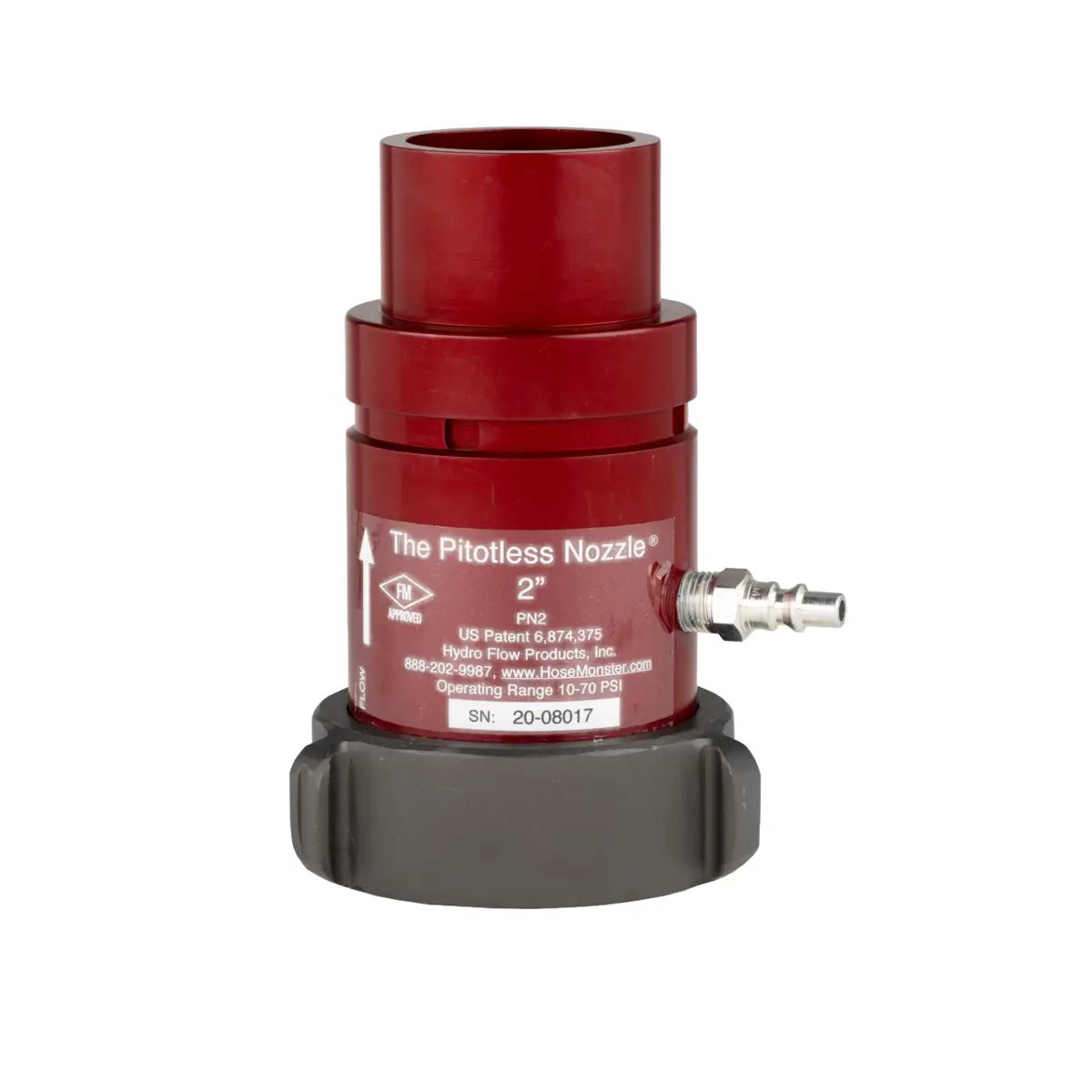
With the 2″ Pitotless Nozzle® Grooved, you can achieve precise flow-rate measurements without the hassle of pitot replacements. Ideal for professionals conducting fire pump tests, fire flow tests, and unidirectional flushing, this nozzle ensures reliable performance and safety.
Price:$903.95
Looking for a quote? Simply add your items to the cart and choose Request for Quote during checkout.
Enter a value between 1 and 100000000 in increments of 1.
Earn Darley Dollars with this purchase
The 2″ Pitotless Nozzle® Grooved by Hose Monster Company is an innovative tool designed to measure water flow-rate during fire pump tests, fire flow tests on hydrants, and unidirectional flushing. This nozzle eliminates the need for a pitot, ensuring uninterrupted testing even in the presence of debris. It is FM Approved and can be used with the Little Hose Monster™ or for discharging into open atmosphere.
Features
- Operating Range with Little Hose Monster™: 493 to 1,305 GPM
- Operating Range to Open Atmosphere: 529 to 1,399 GPM
- FM Approved: Ensures reliability and safety
- Pitotless Design: No need to shut down tests to replace damaged pitots
- Laminar Flow: Unique patented shape creates steady laminar flow, eliminating turbulence and gauge needle bounce
- Anodized Aluminum Construction: Durable and resistant to corrosion
- Color-Coded: Easy size identification
- Standard Hose Connection: 2.5″ NH hard-coat anodized aluminum swivel coupling (other thread specs available on request)
- Grooved Outlet: Connects seamlessly to the Little Hose Monster™
Installation and Usage
The Pitotless Nozzle® Grooved can be mounted directly on a hydrant, test header valve, or any fixed 2.5″ outlet. When used without the Little Hose Monster™, it must be securely attached to a stationary device to prevent dangerous thrust from high-velocity water flow. Ensure a clear path for water discharge to avoid hazards. Do NOT attach the nozzle directly to the end of an unsecured hose without the Little Hose Monster™. A nozzle extension or stream shaper may be required if the flow-rate is excessive.
Tools Needed for Attachment
- Wrench: A wrench is essential for tightening the nozzle onto the hydrant outlet or adapter. It ensures a secure and leak-free connection.
- Adapter (if needed): Depending on the hydrant size, you may need an adapter to match the nozzle's 2.5″ connection size.
- Teflon Tape: Use Teflon tape on the threads to ensure a tight seal and prevent leaks.
- Safety Gear: Always wear appropriate safety gear, such as gloves and goggles, to protect yourself during the attachment process.
Attachment Steps
- Prepare the Hydrant: Clean the hydrant outlet and ensure it is free from debris.
- Attach the Adapter (if needed): Securely fasten the adapter to the hydrant outlet.
- Connect the Nozzle: Align the nozzle’s swivel coupling with the hydrant outlet or adapter and twist it on. Use a wrench to tighten the connection.
- Check for Leaks: Slowly open the hydrant to check for leaks. Tighten further if necessary.
To securely attach the 2″ Pitotless Nozzle® Grooved to a hydrant, follow these steps:
- Ensure Compatibility: Verify that the hydrant has a 2.5″ outlet that matches the nozzle's connection size.
- Prepare the Hydrant: Make sure the hydrant is in good condition and free from debris. Clean the outlet if necessary.
- Attach the Nozzle:
- Align the Threads: Position the nozzle's swivel coupling with the hydrant outlet.
- Securely Fasten: Twist the nozzle onto the hydrant outlet, ensuring a tight and secure fit. Use a wrench if needed to ensure it is firmly attached.
- Check for Leaks: Once attached, slowly open the hydrant to check for any leaks around the connection. Tighten further if necessary.
- Clear the Area: Ensure the area around the hydrant is clear of obstacles and personnel to safely manage the water discharge.
- Monitor the Flow: Open the hydrant fully and monitor the flow-rate using the nozzle's internal pressure gauge.
Applications
- Fire Pump Testing: Accurate flow-rate measurements during fire pump tests
- Fire Flow Testing: Reliable testing on hydrants
- Unidirectional Flushing: Effective flushing operations
- Direct Hydrant Attachment: Can be mounted directly on hydrants for testing
Maintenance and Storage
- Maintenance: Regularly inspect the nozzle for debris and damage. Clean the internal pressure gauge to ensure accurate readings.
- Storage: Store in a dry, cool place to prevent corrosion. Ensure the nozzle is securely fastened to prevent damage during storage.
The Pitotless Nozzle® Grooved (PN#GRV) must be used in conjunction with the Little Hose Monster™ (HML) or attached directly to a hydrant or test header valve, discharging into open atmosphere.
- GPM Min: 493
- GPM Max: 1,399
- FM Approved PSI Min: 10
- FM Approved PSI Max: 70
- Connection Size: 2.5″
- Model: PN2


