
Harrington, Inc.
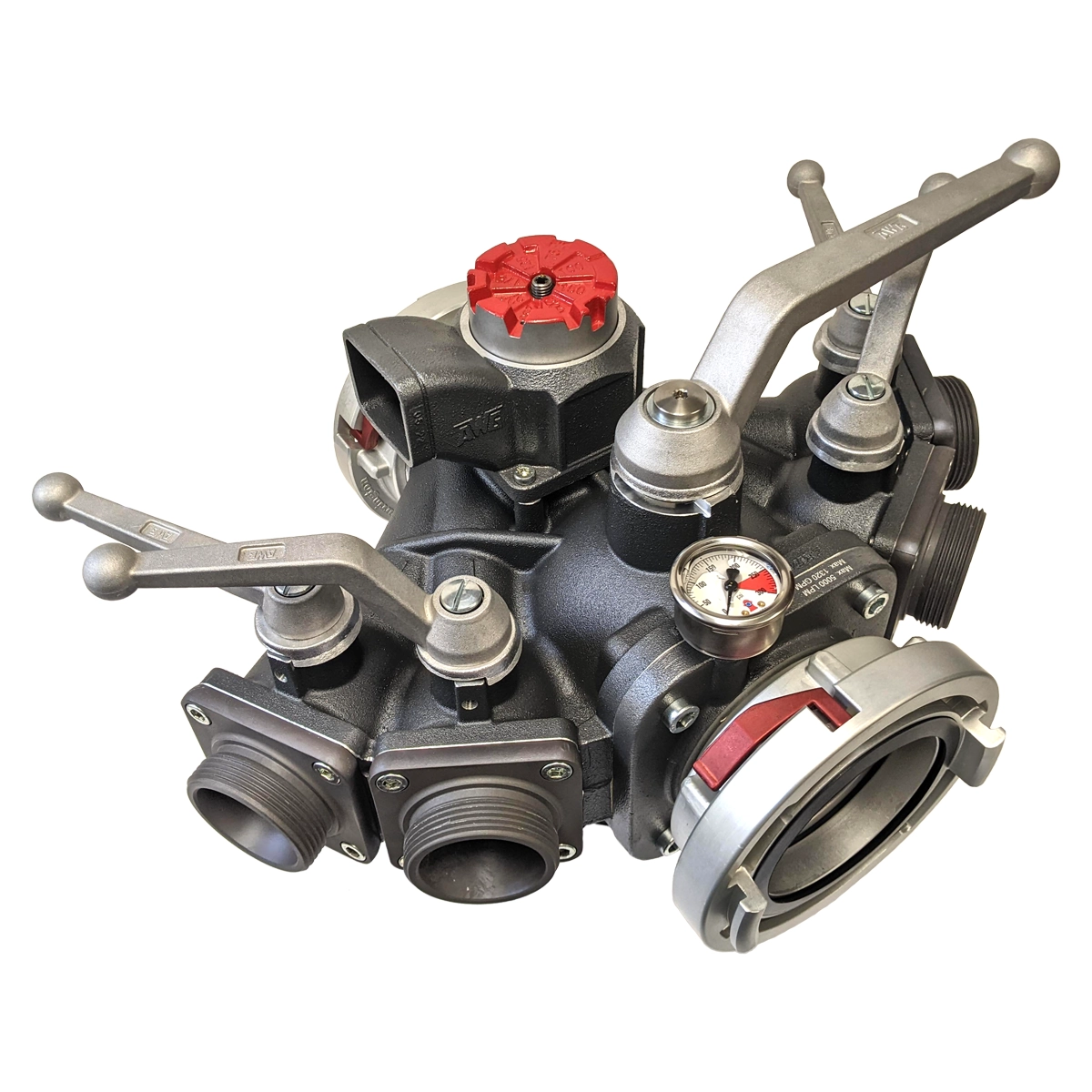
Supply Multiple Attack Lines Manifold - 5-Way
Harrington H400 5-Way Manifolds are lightweight, high-performance tools designed for efficient water distribution in firefighting operations. These manifolds allow for the connection of multiple hoses to a single large-diameter hose (LDH), ensuring optimal water flow and pressure management.
Looking for a quote? Simply add your items to the cart and choose Request for Quote during checkout.
Enter a value between 1 and 100000000 in increments of 1.
Earn Darley Dollars with this purchase
Features
- Lightweight Design: Easy to handle and transport, reducing fatigue during operations.
- Corrosion Resistance: Hard anodized balls and stainless-steel tappets for enhanced durability.
- Adjustable Pressure Relief Valve: Ensures safe operation by managing pressure levels.
- Liquid-Filled Pressure Gauge: Provides accurate pressure readings for optimal performance.
- Multiple Connection Options: Available in various configurations to suit different needs.
Benefits
- Efficient Water Distribution
- Allows for the connection of multiple hoses to a single large-diameter hose (LDH), ensuring optimal water flow and pressure management during firefighting operations.
- Enhanced Safety
- Equipped with an adjustable pressure relief valve and a liquid-filled pressure gauge, these manifolds help manage and monitor water pressure, reducing the risk of hose failure and ensuring safe operation.
- Durability
- Made from lightweight aluminum with hard anodized balls and stainless steel tappets, these manifolds are resistant to corrosion and wear, providing long-lasting performance even under demanding conditions.
- Versatility
- Available in various configurations to suit different needs, these manifolds can be used with different hose types and sizes, making them adaptable to various firefighting scenarios.
- Ease of Use:
- The lightweight design and straightforward connection process make these manifolds easy to handle and operate, reducing fatigue and improving efficiency during firefighting operations.
- Reliable Performance:
- Regular maintenance ensures these manifolds remain in optimal working condition, providing consistent and reliable performance when needed most.
What is it?
The Harrington H400 5-Way Manifolds are specialized devices used to distribute water from a large-diameter hose to multiple smaller hoses. They are essential for firefighting operations, allowing for efficient water management and distribution.
How is it used?
These manifolds are connected to a large-diameter hose (LDH) and then to multiple smaller hoses. The process involves:
- Connecting the LDH: Attach the LDH to the inlet of the manifold.
- Connecting Smaller Hoses: Attach up to four smaller hoses to the outlets.
- Pressure Management: Use the adjustable pressure relief valve and pressure gauge to monitor and manage water pressure.
Who uses it?
Harrington H400 5-Way Manifolds are primarily used by firefighting professionals, emergency responders, and water supply managers. They are crucial tools for anyone involved in managing water distribution during firefighting operations.
What is it used with?
These manifolds are used with large-diameter hoses (LDH) and smaller hoses, typically in firefighting operations. They are compatible with various hose types and sizes, ensuring versatility in different scenarios.
Material
The manifolds are made from lightweight aluminum, with hard anodized balls and stainless-steel tappets for corrosion resistance. This combination ensures durability and long-lasting performance.
Maintenance Guide
- Regular Cleaning:
- After Each Use: Wipe down the manifold with a clean, dry cloth to remove any dirt, debris, or residue.
- Deep Cleaning: Periodically, use a mild detergent and water to thoroughly clean the manifold. Rinse well and ensure it is completely dry before storing.
- Inspection:
- Visual Check: Regularly inspect the manifold for any signs of wear, damage, or corrosion. Pay special attention to the connections and moving parts.
- Functional Test: Test the manifold periodically to ensure all connections are secure and the pressure relief valve is functioning correctly.
- Lubrication:
- Moving Parts: Apply a suitable lubricant to the moving parts, such as the pressure relief valve and any other mechanical components, to ensure smooth operation. Avoid over-lubrication, as it can attract dirt and debris.
- Pressure Relief Valve:
- Adjustment: Check and adjust the pressure relief valve as needed to ensure it is set to the correct pressure for your operations.
- Testing: Regularly test the valve to ensure it opens and closes properly, maintaining safe pressure levels.
- Storage:
- Dry Environment: Store the manifold in a dry, clean environment to prevent corrosion and damage.
- Protective Cover: Use a protective cover or case to shield the manifold from dust, moisture, and physical damage.
- Replacement of Worn Parts:
- Components: Replace any worn or damaged components, such as gaskets, seals, or connectors, to maintain the integrity and performance of the manifold.
- Drawbars and Tappets: Inspect and replace drawbars and tappets if they show signs of wear or damage.
Additional Tips
- Training: Ensure that all users are properly trained in the use and maintenance of the manifold to prevent misuse and damage.
- Documentation: Keep a maintenance log to track inspections, cleanings, and any replacements or repairs. This helps in maintaining a regular maintenance schedule.
- Inlet: 4" Storz lock.
- Outlet: (1) 4" Storz lock & (4) 2.5" NH male.
- Valve: 250-S RV (LDH Manifold)
- Model: H400-40-40-25NH:
- Inlet: 5" Storz lock.
- Outlet: (1) 5" Storz lock & (4) 2.5" NH male.
- Valve: 250-S RV (LDH Manifold).
- Model: H400-50-50-25NH