Riptide
Riptide Typhoon Remote Manifold
SKU#: BR097
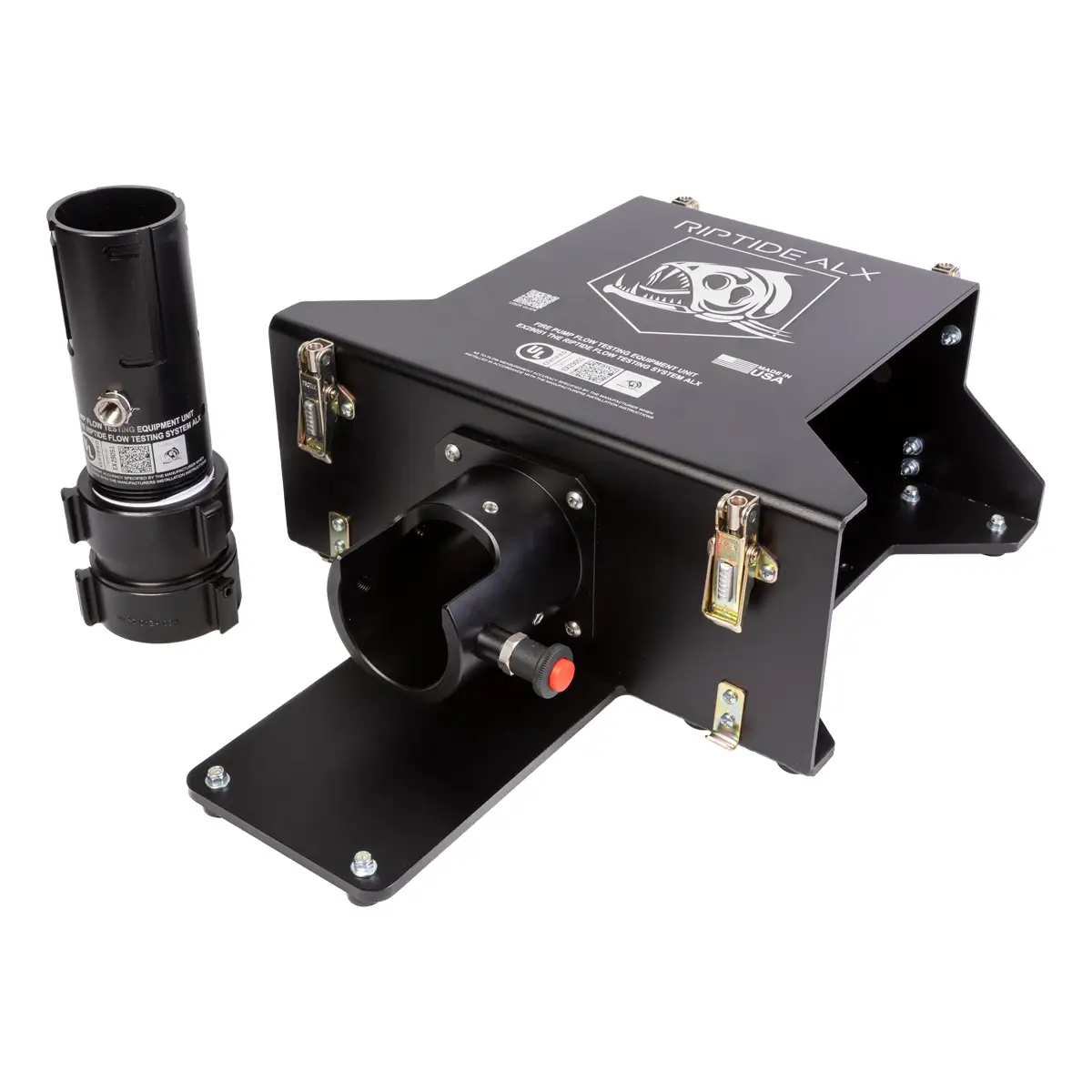
The Riptide Typhoon Remote Manifold is a professional‑grade flow testing tool designed for first responders who need accurate pitot readings from a safe distance. This system allows firefighters to capture readings from up to 50 feet away from the Riptide diffuser, supporting safer and more efficient hydrant, pump, and water supply testing in field and training environments.
Price:$2,100.95
Looking for a quote? Simply add your items to the cart and choose Request for Quote during checkout.
Enter a value between 1 and 100000000 in increments of 1.
Earn Darley Dollars with this purchase
Features:
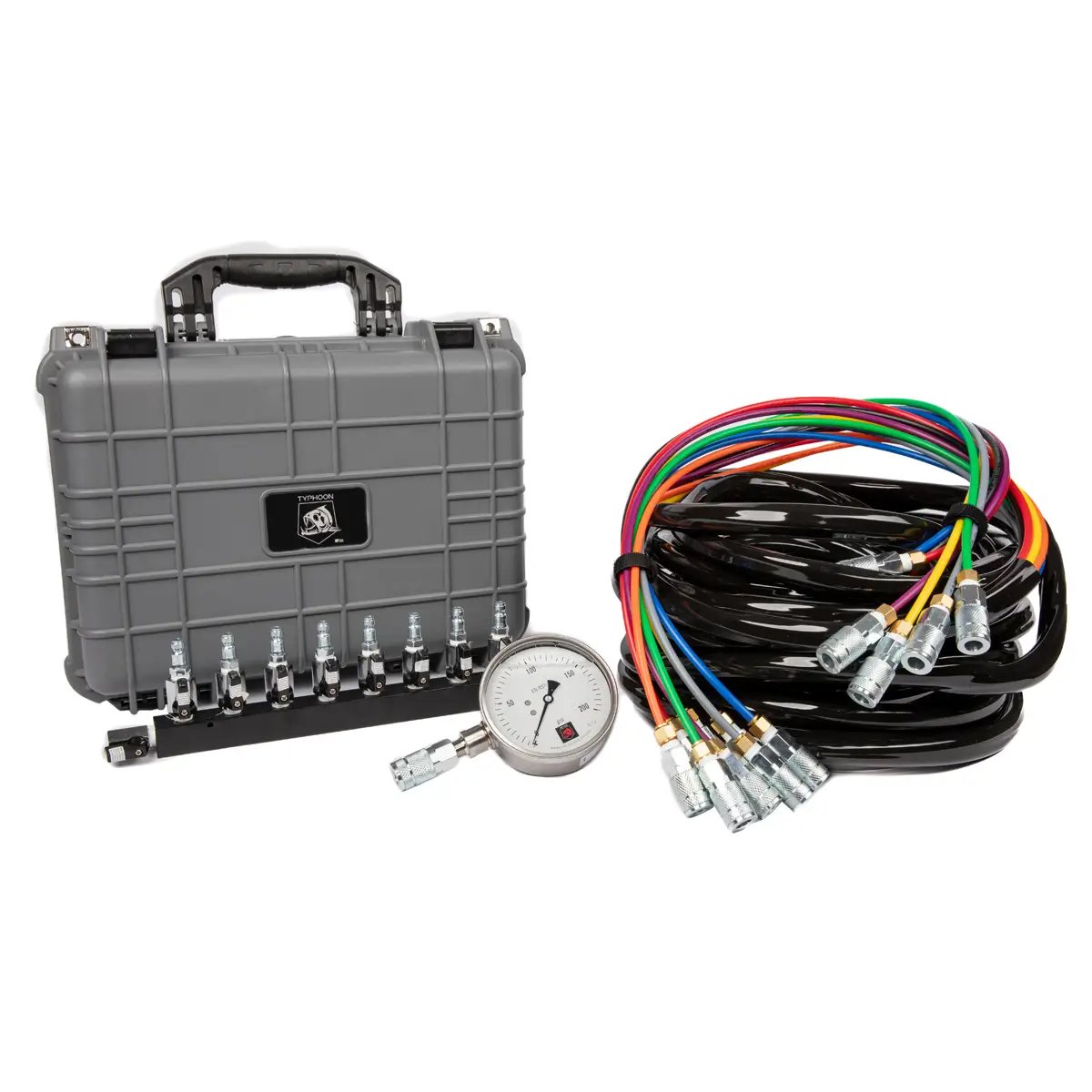
- Remote Reading Capability: Allows firefighters to capture pitot readings up to 50 feet away from the Riptide diffuser, reducing the need to stand directly in high-flow discharge areas.
- Quick Connect Assembly: Includes 8 jacketed female quick connects with color‑coded tubes for fast, correct setup during hydrant testing, pump testing, or training evolutions.
- Long Tubes: Each tube is 50 feet long, providing ample reach to safely position the gauge away from traffic, spray patterns, or operating apparatus.
- 8‑Way Manifold: Each manifold is equipped with its own pitot and valve, along with a male quick connection for the gauge, allowing multiple discharge points to be monitored from one central location.
- Calibrated Gauge: Features a glycerine‑filled gauge supplied with a calibration certificate to support accurate flow readings critical for fire protection system verification and water supply testing.
- Sturdy Carrying Case: All components are organized and protected in a durable carrying case for easy transport on apparatus or to training sites.
What is it?
The Riptide Typhoon Remote Manifold is a flow‑testing and monitoring tool designed for fire departments and other first responders who need accurate pitot readings while maintaining safe distance from flowing water. It enables remote measurement when testing hydrants, fire pumps, and water delivery systems using Riptide pitot equipment.
Benefits
- Improved Firefighter Safety: Remote reading capability allows personnel to stay clear of high‑velocity water streams, icy conditions, or traffic hazards during hydrant and pump testing.
- Faster Setup on the Fire Ground or Training Site: Color‑coded, quick‑connect tubing simplifies deployment, reducing setup time and minimizing connection errors during drills or inspections.
- Multi‑Line Monitoring: The 8‑way manifold allows multiple pitots to be managed from one system, supporting complex testing scenarios without moving the gauge repeatedly.
- Accurate Water Flow Data: The glycerine‑filled gauge with calibration certification provides reliable readings that support informed decisions about water supply capabilities.
- Built for Field Use: Durable components and protective storage make the system well‑suited for repeated use in demanding fire service environments.
- Portable and Organized: The carrying case keeps all components together, making it easy to deploy from an apparatus compartment or transport between test locations.
- Designed for Professional First Responders: Ideal for fire departments, fire protection inspectors, training officers, and water supply specialists responsible for verifying hydrant and pump performance.
How is it used?
The Riptide Typhoon Remote Manifold connects to a Riptide diffuser using the quick‑connect assembly. Color‑coded tubes help ensure proper connections between pitots and the manifold. Once connected, firefighters can monitor pitot readings from a safe distance, allowing real‑time observation of flow and pressure during hydrant testing, pump testing, or training exercises.
Maintenance Information:
Inspect tubes and quick‑connect fittings regularly for wear or damage. Periodically recalibrate the glycerine‑filled gauge to maintain accurate readings. When not in use, store all components in the carrying case to protect them from impact and environmental exposure.
Compatible With
Compatible with Riptide pitot systems, allowing integration into existing fire department flow‑testing setups.
Material
The manifold and tubes are made from high-quality, durable materials designed to withstand industrial environments.
Calibration Process
- Preparation:
- Ensure the gauge and manifold are clean and free from any debris.
- Gather necessary tools, including a calibration pump, standard weights, or a reference gauge.
- Initial Setup:
- Connect the gauge to the calibration pump or reference gauge using the quick connect assembly.
- Make sure all connections are secure and there are no leaks.
- Zero Adjustment:
- Before applying any pressure, check the gauge's zero reading. If it is not at zero, adjust the zero setting according to the manufacturer's instructions.
- Applying Pressure:
- Gradually apply pressure using the calibration pump or reference gauge.
- Increase the pressure in increments, noting the readings at each step.
- Comparison:
- Compare the readings on the glycerine-filled gauge with the known values from the reference gauge or standard weights.
- If there is a discrepancy, adjust the gauge accordingly.
- Fine-Tuning:
- Make fine adjustments to the gauge to ensure it matches the reference readings accurately.
- Repeat the process at different pressure levels to confirm consistency.
- Documentation:
- Record the calibration results, including any adjustments made.
- Ensure the calibration certificate is updated with the new calibration data.
- Final Check:
- After calibration, perform a final check to ensure the gauge is functioning correctly.
- Disconnect the gauge and store it properly in the carrying case.
- Tube Length: 50 feet each
- Number of Tubes: 8
- Manifold: 8-way with individual pitots and valves
- Gauge: Glycerine-filled, calibrated with certificate
- Carrying Case: Included
- Model: 6510926