
Physio-Control/Stryker
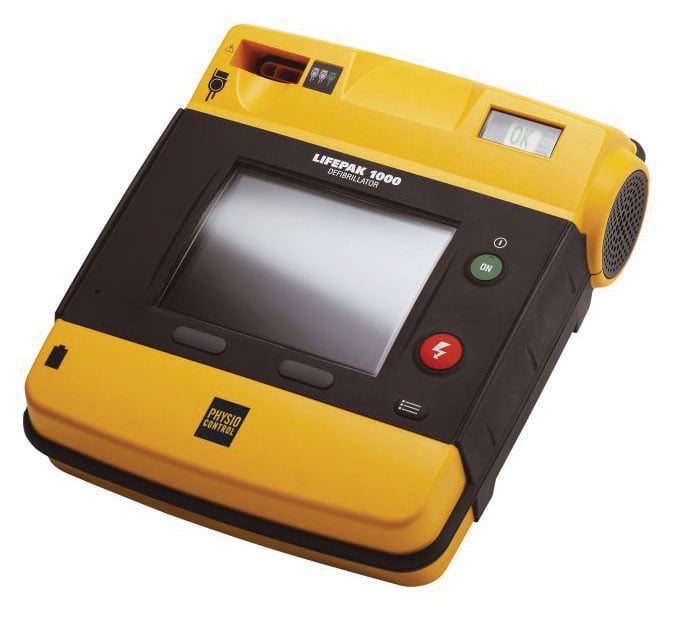
Physio-Control Lifepak 1000 AED - Semi-Automatic with Manual Defib Override & ECG
SKU#: BL876
Ships via Standard Ground
Typically ships in 1 week
The Physio-Control LIFEPAK 1000 AED is a rugged, reliable defibrillator designed for professional responders. It features manual override, ECG display, and advanced shock therapy for cardiac emergencies.
Looking for a quote? Simply add your items to the cart and choose Request for Quote during checkout.
Enter a value between 1 and 100000000 in increments of 1.
Earn Darley Dollars with this purchase
The Physio-Control LIFEPAK 1000 AED is a professional-grade automated external defibrillator designed for emergency medical response. Engineered for rugged environments, this portable defibrillator delivers high-energy shock therapy and includes a manual defibrillation override and ECG monitoring, making it ideal for advanced life support situations.
Features
- Manual Override Capability: Enables trained responders to deliver shocks manually.
- ECG Display: Provides real-time heart rhythm monitoring.
- High-Energy Shock Therapy: Delivers escalating energy levels of 200J, 300J, and 360J.
- Durable Design: Built for rugged environments with IP55 rating.
- Visual Display: Clear, easy-to-read screen for guidance and ECG.
- Long-Life Battery: Non-rechargeable battery with up to 4 years of standby life.
- Pre-Connected Pads: QUIK-COMBO Redi-Pak pads reduce deployment time.
- Comprehensive Kit: Includes CPR shield, inspection tag, and facility decal.
How is it used?
This AED is used to treat victims of sudden cardiac arrest by delivering a controlled electric shock to restore normal heart rhythm. The device guides responders through the process with clear visual prompts and is compatible with QUIK-COMBO electrode pads for rapid deployment. The manual override feature allows trained professionals to administer shocks manually when needed.
Who uses it?
The LIFEPAK 1000 AED is trusted by EMS teams, fire departments, law enforcement, hospital staff, and trained workplace responders. Its durability and advanced features make it suitable for both pre-hospital care and clinical environments.
What is it used with?
This AED is used with:
- QUIK-COMBO Adult Electrode Pads with Redi-Pak Pre-Connect
- Physio-Control Non-Rechargeable Battery
- Semi-Rigid Carry Case
- CPR Shield Keychain
- AED Inspection Tag
- AED Facility Decal
What material is it made from?
The LIFEPAK 1000 AED is constructed from impact-resistant medical-grade polymers and features a sealed, water-resistant casing rated to IP55, ensuring protection against dust and water ingress.
Maintenance Information
Routine maintenance includes:
- Monthly visual inspections using the included AED inspection tag.
- Replacing electrode pads and battery before expiration.
- Ensuring the device passes self-tests and displays readiness indicators.
- Keeping the AED in its semi-rigid carry case to protect against environmental damage.
Additional Product Insights
- Rugged Durability: The LIFEPAK 1000 is built for extreme environments. It has passed rigorous drop tests and is housed in a protective case with bumpers. Its IP55 rating ensures resistance to dust and water, making it ideal for use in ambulances, fire trucks, police vehicles, and outdoor settings
- Vehicle-Friendly Design: Specifically engineered to withstand continuous vibrations and movement, this AED is vehicle-compatible, allowing it to be safely stored and used in mobile emergency units without damage
- Advanced CPR Support – cprMAX™ Technology: This exclusive feature allows responders to perform pre-shock CPR while the AED charges, minimizing interruptions and improving survival outcomes. It also includes a CPR countdown timer to guide responders through each cycle
- High-Energy Shock Capability: Unlike many AEDs that max out at 200J, the LIFEPAK 1000 delivers escalating energy up to 360 joules, which is clinically proven to be more effective for difficult-to-defibrillate patients
- ECG Monitoring & Manual Override: The device includes a large LCD screen capable of displaying ECG readings. With the manual defibrillation override, trained professionals can take control of shock delivery, making it suitable for both BLS and ALS teams
- Long Battery Life & Shock Capacity: The non-rechargeable battery supports up to 220 shocks and 17 hours of monitoring time, reducing the need for frequent replacements
- Data Management with CODE-STAT Software: Post-event data can be reviewed using CODE-STAT 9.0, allowing teams to analyze performance and improve future response protocols
- Training & Simulation Tools Available: Physio-Control offers Trainer 1000 and AED Challenge tools for realistic, hands-on training without using live energy. These tools help responders stay proficient and confident
- Customizable Settings: The AED is programmable to match your team’s CPR and resuscitation protocols, making it adaptable for various clinical and field environments
- Compatibility with LIFEPAK Systems: Electrodes used with the LIFEPAK 1000 are compatible with other LIFEPAK defibrillators and monitors, allowing seamless patient handoff between responders and hospital teams
AED Best Practices for Emergency Use
- Recognize the Emergency: Use an AED when someone suddenly collapses, is unresponsive, is not breathing or only gasping, and has no detectable pulse. Immediately call 911 and begin CPR while retrieving the AED.
- Prepare the Patient: Ensure the person is on a dry, flat surface. Remove clothing from the chest area, dry the chest if wet, and shave excessive chest hair if it interferes with pad adhesion. Remove any metal objects or medication patches, and avoid placing pads directly over pacemakers or implanted devices.
- Turn On the AED: Open the AED lid or press the power button. Follow the voice and visual prompts provided by the device.
- Attach the Pads: For adults, place one pad on the upper right chest and the other on the lower left side below the armpit. For children or infants, use pediatric pads if available and place one pad on the center of the chest and the other on the center of the back.
- Let the AED Analyze: Ensure no one is touching the patient. Loudly say “CLEAR!” before analysis and shock. The AED will determine if a shock is needed.
- Deliver the Shock: If prompted, press the shock button. AEDs will not deliver a shock unless a shockable rhythm is detected.
- Resume CPR Immediately: After shock delivery or if no shock is advised, begin chest compressions and rescue breaths. Continue until emergency responders arrive or the person shows signs of recovery.
- Special Considerations: Move the person to a dry area if in a wet environment. Ensure no one else is touching the person if on a metal surface. AEDs are safe to use on pregnant individuals. In clinical settings, check for medical directives such as DNR orders.
- Maintenance Best Practices: Conduct monthly visual inspections. Check battery and pad expiration dates. Ensure the readiness indicator shows the device is functional. Store AEDs in visible, accessible locations. Clean the device with 90% isopropyl alcohol or mild soap—never immerse it in water.
- Why Speed Matters: Survival rates drop 7–10% per minute without defibrillation. Using an AED within 3 minutes of collapse can raise survival rates to 74% for ventricular fibrillation cases.
What's Included
- (1) LIFEPAK 1000 AED Unit with Manual Override and ECG display
- (1) Pair of QUIK-COMBO Adult Electrode Pads with Redi-Pak Pre-Connect
- (1) Non-Rechargeable Battery (Physio-Control LIFEPAK 1000 AED Battery)
- (1) Semi-Rigid Carry Case for protection and portability
- (1) Quick Reference Card for fast guidance during emergencies
- (1) Pocket CPR Shield Keychain with gloves for safe resuscitation
- (1) AED Inspection Tag to track maintenance and readiness
- (1) AED Equipped Facility Window/Wall Decal for visibility and compliance
- 4-Year Manufacturer Warranty for peace of mind and reliability
- Height: 3.4 inches
- Width: 9.2 inches
- Depth: 10.9 inches
- The LIFEPAK 1000 weighs 7.1 pounds with one set of REDI-PAK electrodes and one non-rechargeable battery.
- Adult Electrode Pad Life: 2 Years
- Battery Life: 4 Years
- Shock Therapy (Joules): 200 - 300 - 360
- Manufacturer Warranty: 4 Years
- Visual Display: Yes
- CPR Feedback: No
- Dual Capability Electrode Pads: No
- Dual Language Capability: No
- IP Rating: IP55
- Model: 99425-000025