
Task Force Tips
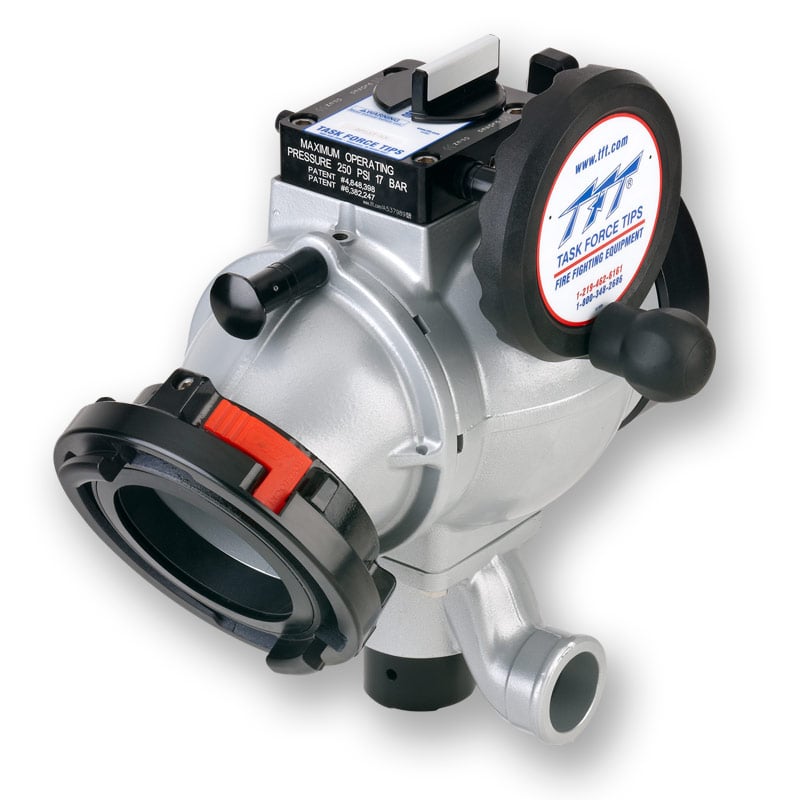
Jumbo Short Ball Intake Valve
High-performance Jumbo Ball Intake Valves designed for demanding firefighting operations. These valves are engineered to provide reliable water delivery with large water ways and minimal loss at flows up to 3000 gallons per minute (GPM). They feature a unique polymer ring coupling design that prevents corrosion by eliminating issues related to dissimilar metals
Looking for a quote? Simply add your items to the cart and choose Request for Quote during checkout.
Enter a value between 1 and 100000000 in increments of 1.
Earn Darley Dollars with this purchase
Features
- High-Flow Capability: Supports water flow up to 3000 GPM.
- Corrosion Resistance: Polymer ring coupling design prevents corrosion.
- Manual and Remote-Control Options: Available in both configurations for versatile use.
- Swiveling Inlet: Prevents unwanted kinking of supply lines.
- Stainless Steel Components: Includes a stainless half ball design and other internal stainless components.
- Pressure Relief Valve: Fast reacting, high volume, field settable pressure relief valve.
- Powder Coated Finish: Hard anodized and powder-coated finish for durability.
What is it?
The Jumbo Ball Intake Valves are specialized firefighting equipment designed to manage high volumes of water flow efficiently. They are used to connect hoses to fire hydrants or other water sources, ensuring a steady and controlled water supply during firefighting operations.
How is it used?
These valves are typically installed on fire trucks or other firefighting apparatus. They can be operated manually or remotely, depending on the model. The swiveling inlet allows for easy hose connection without kinking, and the pressure relief valve ensures safe operation under high pressure.
Who uses it?
The primary users of these valves are firefighting professionals and emergency response teams. They are essential for any firefighting operation that requires high water flow and reliable equipment.
Installation Process
- Tools Required
- Wrenches (various sizes)
- Screwdrivers
- Pipe wrench
- Lubricant (for moving parts)
- Thread sealant or Teflon tape
- Torque wrench
Installation Steps
- Preparation
- Ensure that all components are present and undamaged.
- Clean the intake valve and the connecting hoses to remove any debris or contaminants.
- Apply thread sealant or Teflon tape to the threaded connections to ensure a watertight seal.
- Mounting the Valve
- Position the valve on the apparatus where it will be mounted.
- Secure the valve using the appropriate mounting brackets and hardware. Tighten the bolts to the manufacturer's recommended torque specifications.
- Connecting the Hoses
- Attach the hose to the swiveling inlet of the valve. Ensure that the connection is secure and that the hose is not kinked.
- Use a pipe wrench to tighten the hose connections, ensuring a snug fit without over-tightening.
- Setting Up the Pressure Relief Valve
- Locate the pressure relief valve on the intake valve assembly.
- Adjust the pressure relief valve to the desired setting according to the manufacturer's instructions. This ensures that the valve will release excess pressure to prevent damage to the system.
- Testing the Installation
- Once the valve is securely mounted and all connections are made, perform a pressure test to ensure there are no leaks.
- Open and close the valve several times to verify smooth operation.
- Check the pressure relief valve to ensure it is functioning correctly.
- Final Adjustments:
- Make any necessary adjustments to the valve or connections based on the test results.
- Ensure that all moving parts are properly lubricated for smooth operation.
- Detailed installation instructions are provided in the product manuals,
Maintenance Information
Regular maintenance is crucial to ensure the longevity and performance of the valves. This includes:
- Inspecting the valve for any signs of wear or damage.
- Cleaning the valve components to prevent buildup of debris.
- Lubricating moving parts to ensure smooth operation.
- Checking the pressure relief valve settings and adjusting as necessary.
Compatibility and Use Cases
These valves are compatible with various firefighting apparatus and can be used in multiple scenarios, such as:
- High-rise building fires where a steady and high-volume water supply is critical.
- Industrial fires requiring large amounts of water for suppression.
- Rural firefighting operations where water sources may be limited and efficient water management is essential.
- Color: Silver
- Length: 18
- Valve Type: Jumbo
- Valve Control Location: Right Handwheel
- Valve PRV Style: Plain Outlet
- Valve PRV Location: Bottom Mount
- Waterway Size (Metric): 133 mm
- Waterway Size (Imperial): 5.25"
- Valve Control Style: Manual Handwheel
- Valve Elbow: Swiveling
- Valve Flow Direction: Bi-Directional
- Valve Inlet Count: Single
- Valve Inlet Type: Storz
- Valve Inlet Style: Quick-Connect
- Valve Inlet Swivel: Rigid
- Valve Outlet Count: Single
- Valve Outlet Size (Imperial): 6"
- Valve Outlet Size (Metric): 150 mm
- Valve Outlet Type: NH Female
- Valve Outlet Style: Handles
- Valve Outlet Swivel: Swivel
- Dimensions: 18.00 × 18.00 × 14.00 in
Item Specifics
- Valve Inlet Size (Imperial): 4"
- Valve Inlet Size (Metric): 100 mm
- Weight: 32.200 lbs
- Model: AX1SP-NX
- Valve Inlet Size (Imperial): 5"
- Valve Inlet Size (Metric): 125 mm
- Weight: 31.500 lbs
- Model: AX1ST-NX
- Valve Inlet Size (Imperial): 6"
- Valve Inlet Size (Metric): 150 mm
- Weight: 34.000 lbs
- Model: AX1SX-NX