
Circul-Air
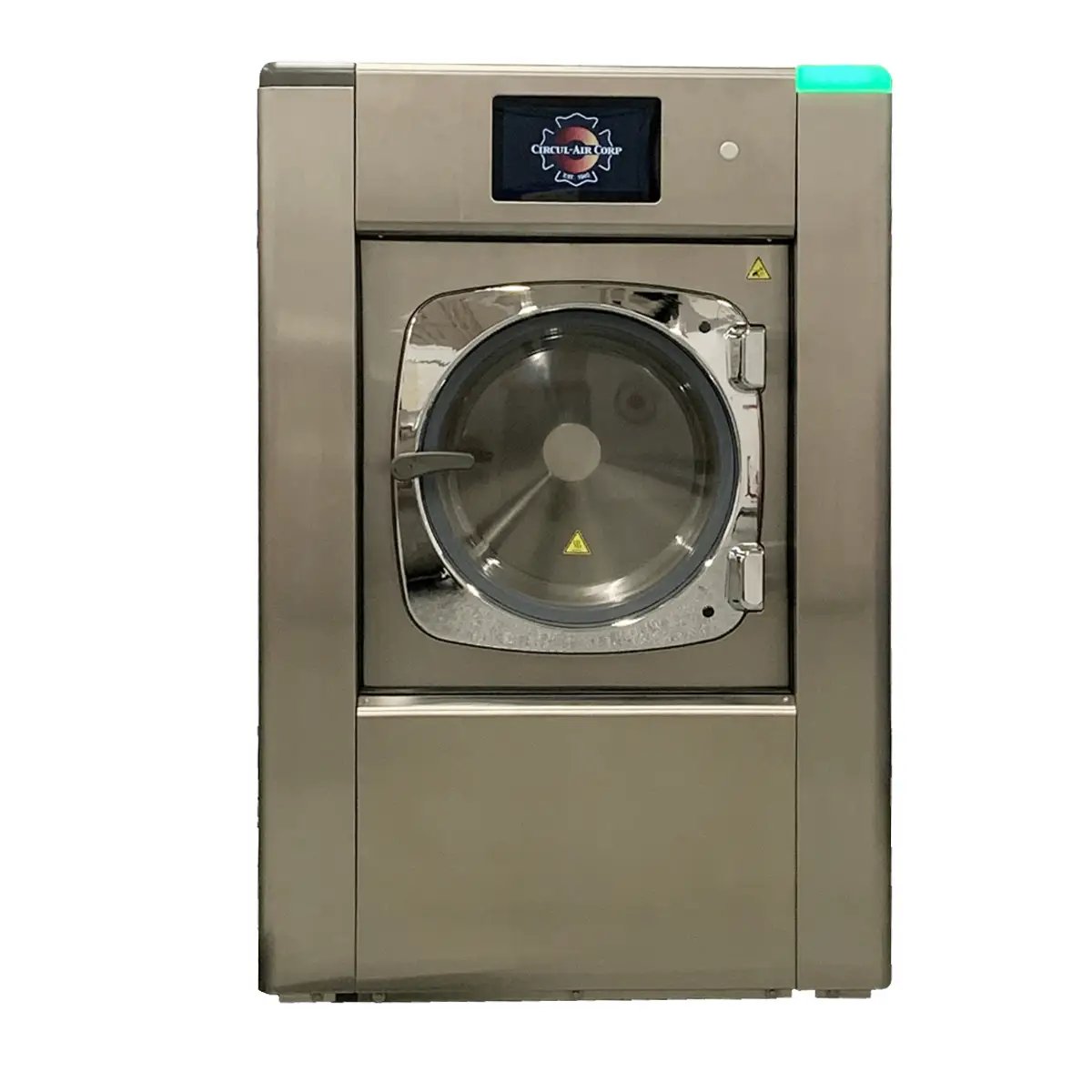
Circul-Air Genius Pro Industrial Soft Mount Extractor
The Circul-Air Genius Pro is a high-efficiency, industrial-grade washer-extractor engineered specifically for fire departments, emergency response teams, and industrial PPE users. Designed to meet and exceed NFPA 1851 standards, this extractor provides deep, safe cleaning for turnout gear, bunker gear, and other heavy-duty protective apparel. Its soft-mount design allows for flexible installation without the need for reinforced concrete pads, making it ideal for both new and retrofit facilities.
Looking for a quote? Simply add your items to the cart and choose Request for Quote during checkout.
Enter a value between 1 and 100000000 in increments of 1.
Earn Darley Dollars with this purchase
Features
- Soft-Mount Suspension System: Internal shock absorbers and springs reduce vibration, allowing installation on upper floors or non-concrete surfaces.
- Programmable Touchscreen Controls: Fully customizable wash cycles with programmable water levels, temperature, and extraction speeds.
- High G-Force Extraction: Up to 400 Gs of force to remove more water, reducing drying time and energy use.
- Stainless Steel Drum and Cabinet: Corrosion-resistant, durable, and easy to sanitize.
- NFPA 1851 Compliant: Meets all guidelines for the safe cleaning of firefighter PPE.
- Energy and Water Efficient: Optimized for reduced utility consumption without compromising performance.
- Built-In Diagnostics: Alerts for maintenance, errors, and performance tracking.
- Quiet Operation: Engineered for reduced noise and vibration.
Installation
Install Method – Soft-Mount / Freestanding
Soft-mount extractors use internal suspension systems to absorb vibration, eliminating the need for bolting the unit to a concrete pad. This freestanding design allows for installation on wood, tile, or upper-level floors, making it ideal for facilities with space or structural limitations.
Tools Needed for Installation
- Level and measuring tape
- Adjustable wrenches and socket set
- Screwdrivers (Phillips and flathead)
- Electrical wiring tools (if hardwiring)
- Water supply hose fittings
- Drain hose or piping tools
- Anchoring brackets (optional for seismic zones)
Electrical Requirements
- Voltage: 208–240V (varies by model)
- Phase: Single or Three Phase (model dependent)
- Amperage: Typically ranges from 15–30 amps
- Must be installed by a licensed electrician to ensure compliance with local electrical codes and safety standards
Drain Method:
- Floor Drain 2"
Maintenance Information
- Daily: Wipe down door gasket and drum, check for debris in the filter trap.
- Weekly: Inspect hoses and connections for leaks or wear.
- Monthly: Run a cleaning cycle with approved machine cleaner to prevent buildup.
- Annually: Professional inspection recommended for calibration, software updates, and mechanical checks.
- Self-Diagnostics: Built-in system alerts operators to maintenance needs or operational errors.
Cleaning Cycle Examples
Information below is a suggestion only. Always refer to your owner's manual for full information and precautions.
Light Soil PPE Cycle (Routine Cleaning)
Purpose: For lightly soiled turnout gear used in non-fire incidents or training.
- Pre-Wash: Cold water, 3 minutes, low agitation
- Main Wash: Warm water (105°F), 10 minutes, medium agitation
- Detergent: NFPA-approved PPE detergent
- Rinse 1: Cold water, 3 minutes
- Rinse 2: Cold water, 3 minutes
- Final Extract: 200 G-force, 5 minutes
- Total Time: ~30 minutes
- Safety Precautions: Ensure detergent used is certified for PPE to avoid fabric degradation. Do not overload the drum—follow gear capacity guidelines. Always wear gloves when handling used gear to prevent cross-contamination.
Heavy Soil PPE Cycle (Post-Fire Cleaning)
Purpose: For gear exposed to smoke, soot, and combustion byproducts.
- Pre-Wash: Warm water (95°F), 5 minutes, medium agitation
- Main Wash: Hot water (120°F), 12 minutes, high agitation
- Detergent: Heavy-duty NFPA-compliant detergent with surfactants
- Rinse 1: Warm water, 3 minutes
- Rinse 2: Cold water, 3 minutes
- Final Extract: 300 G-force, 6 minutes
- Total Time: ~40–45 minutes
- Safety Precautions: Use appropriate PPE (gloves, mask) when loading gear contaminated with soot or carcinogens. Ensure proper ventilation in the laundry area. Avoid mixing gear from different incidents to prevent cross-contamination.
Biohazard Decontamination Cycle
Purpose: For gear exposed to bloodborne pathogens or hazardous biological materials.
- Pre-Wash: Cold water, 5 minutes, low agitation
- Main Wash: Hot water (130°F), 15 minutes, medium agitation
- Detergent: Disinfectant detergent approved for PPE
- Rinse 1: Warm water, 3 minutes
- Rinse 2: Cold water, 3 minutes
- Final Extract: 350 G-force, 6 minutes
- Total Time: ~50 minutes
- Note: Follow with drying in a gear dryer with HEPA filtration
- Safety Precautions: Treat all gear as biohazardous—wear gloves, face shield, and gown when handling. Disinfect the machine exterior and surrounding area after the cycle. Dispose of any contaminated water or debris according to local biohazard protocols.
Outer Shell Only Cycle
Purpose: For washing outer shells separately from liners.
- Pre-Wash: Cold water, 3 minutes
- Main Wash: Warm water (110°F), 8 minutes, low agitation
- Detergent: Mild detergent for shell fabrics
- Rinse 1: Cold water, 3 minutes
- Rinse 2: Cold water, 3 minutes
- Final Extract: 250 G-force, 5 minutes
- Total Time: ~30 minutes
- Safety Precautions: Separate shells from liners to prevent damage. Inspect shells for damage before and after washing. Avoid using bleach or harsh chemicals that can degrade reflective trim or fabric coatings.
Liner-Only Cycle
Purpose: For washing thermal liners and moisture barriers separately.
- Pre-Wash: Cold water, 3 minutes
- Main Wash: Warm water (105°F), 10 minutes, gentle agitation
- Detergent: PPE-safe detergent
- Rinse 1: Cold water, 3 minutes
- Rinse 2: Cold water, 3 minutes
- Final Extract: 200 G-force, 4 minutes
- Total Time: ~30 minutes
- Safety Precautions: Handle liners gently to avoid tearing moisture barriers. Use only approved detergents to maintain thermal protection properties. Do not exceed recommended water temperature to prevent delamination.
Common Mistakes to Avoid
- Light Soil PPE Cycle (Routine Cleaning): Using household detergents that can damage moisture barriers. Skipping the pre-wash, which can leave behind surface contaminants. Washing gear with non-PPE items, which can cause cross-contamination or damage.
- Heavy Soil PPE Cycle (Post-Fire Cleaning): Using water that is too hot, which can damage reflective trim. Overloading the machine, which reduces cleaning effectiveness. Not inspecting gear for damage before washing.
- Biohazard Decontamination Cycle: Failing to use a disinfectant detergent rated for biohazards. Not cleaning the machine after the cycle, which can expose others to pathogens. Washing biohazard gear with other items.
- Outer Shell Only Cycle: Washing shells and liners together, which can cause wear or delamination. Using high agitation, which can damage outer shell fabrics. Skipping inspection for tears or heat damage.
- Liner-Only Cycle: Using aggressive agitation or spin speeds that can damage liners. Washing with incompatible fabrics. Not checking for signs of wear or separation in the moisture barrier.
- Drum Material: Industrial-grade stainless steel
- Cabinet Material: Powder-coated steel or stainless steel (model dependent)
- Control Interface: Full-color touchscreen with programmable logic controller (PLC)
- Mount Type: Soft-Mount, Freestanding
- Extraction Speed: Up to 400 G-force
- Water Inlets: Hot and cold (3/4" standard)
- Drain Outlet: 2" gravity or pump-assisted
- Electrical Input: 208–240V, 1 or 3 phase
- Certifications: NFPA 1851 Compliant, ETL Listed, ISO 9001 Manufacturing
- Noise Level: < 70 dB during operation
- Warranty: 3-year parts, 5-year frame and drum
Model Options and Capacities:
- CACSGHD-23-PRO – 23 lbs. | Cleans up to 4 pieces of turnout gear
- CACSGHD-30-PRO – 30 lbs. | Cleans up to 6 pieces of turnout gear
- CACSGHD-45-PRO – 45 lbs. | Cleans up to 9 pieces of turnout gear
- CACSGHD-60-PRO – 60 lbs. | Cleans up to 6 pieces of turnout gear
- CACSGHD-70-PRO – 70 lbs. | Cleans up to 14 pieces of turnout gear